
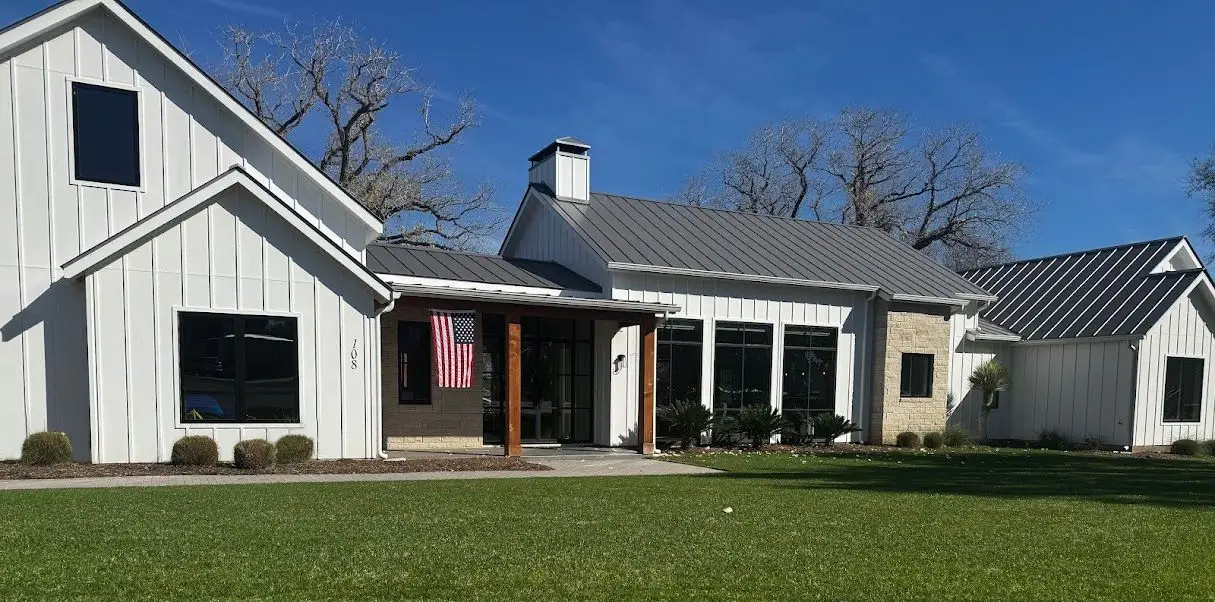
Estate Landscape Maintenance in Austin & Hill Country
Turf, native beds, live oaks, slopes and irrigation on one property, handled by one contractor across the full Central Texas year.
- ✓Reliable weekly service from one local Austin crew
- ✓Healthy, green results — not just a quick mow
- ✓Lawn care and full landscaping under one roof
Why a large property needs its own maintenance program
Irrigation audits come first
In this climate irrigation is not a maintenance detail; it is the budget. We start at the controller and work outward: zone-by-zone audit, head alignment and pressure, catch-cup testing where coverage is in doubt, and scheduling matched to the season and to what the weather actually did rather than to a fixed timer. Under watering restrictions that means knowing which zones can be cut back safely.
Trees, slopes and drainage
On estate properties the expensive risks are structural: a limb over a driveway, a live oak declining from competition it should never have had, decomposed granite washing off a slope every storm, a retaining wall with no drainage behind it. These get inspected on a schedule and raised with you while they are still maintenance rather than replacement.
One contractor for the whole property
You get a property-specific program rather than a route slot, an account manager who walks the property on a set schedule, and reporting on what changed and what is coming. Turf, beds, trees, irrigation and hardscape are handled by one contractor, so you hear about problems from us rather than discovering them yourself on a weekend walk.
Want a quote for your property?
Tell us about your yard — estimates are free.
Estate landscape maintenance in Austin shaped to the Central Texas year
The year has a shape here, and working against it costs twice: once for the visit and again for the damage. Estate landscape maintenance in Austin works best when each season is used for the work it actually suits, from the narrow spring feeding window through summer survival, the fall planting window and winter freeze preparation across the Hill Country.
Spring and summer
Spring is the narrow window when warm-season turf will actually respond to feeding and aeration; miss it and the whole season is compromised. In summer the job stops being growth and becomes survival: mowing height raised, water managed tightly, and no stress-inducing work carried out on established plants while the heat is holding.
Fall
Fall is a second growth window that most programs waste. It is the best time for planting, bed renovation and structural pruning, while cooler weather gives roots time to establish before the next summer arrives. Work done now on beds and new planting is work you are not paying for twice in July.
Winter
Winter is for dormant pruning, irrigation checks and freeze preparation. February 2021 is still visible on Hill Country properties where that preparation was not done. Quiet months are the right time to open up structure in trees, protect vulnerable plant material and check that the irrigation system is ready for the next season.
Start with a property walk and irrigation review
The first step is a walk of the property and an irrigation review, which produces a written program and a monthly figure. It often finds water savings along the way, so get in touch with Elements Lawn & Landscape today.
Frequently asked questions
How often do you visit an estate property?
The schedule is set by the property, not a route. Visits follow the season and the program we agree after the property walk, and your account manager walks the property on a set schedule.
Do you work on properties with wells or rainwater systems?
Yes. Irrigation on large Hill Country properties often draws on a well or a rainwater system, and we schedule and audit it the same way, zone by zone.
What affects the cost of estate landscape maintenance?
The size of the property, the mix of turf, beds and trees, the condition of the irrigation system, and how much slope, drainage and hardscape there is to look after. We price from a written program after walking the property.
Areas we serve
We maintain estate properties in Austin and across the Hill Country, including Barton Creek, Bee Cave, West Lake Hills, Lost Creek, Cedar Park, Round Rock and Kyle. See our landscape maintenance services, our lawn care in Austin, and our landscape design services.